
In the competitive world of digital marketing, the demand for fresh, high-quality visual content is relentless. Traditionally, creating this content has been a major drain on both budgets and timelines. However, the rise of generative AI is revolutionizing the creative process, offering marketers a powerful tool to generate stunning visuals with unprecedented speed and cost-efficiency.
Bypassing Traditional Production Expenses for Massive Cost Savings
Traditional visual content creation is an expensive endeavor. A single professional photoshoot can cost over $10,000, including fees for photographers, models, studios, and post-production. For small businesses, these high costs are a significant barrier, limiting their ability to compete visually. This forces many to rely on generic stock photos that fail to capture brand uniqueness.
AI image generation provides a cost-effective alternative. Instead of large upfront investments, marketers can use AI platforms with budget-friendly subscription models. These tools produce professional-grade images for a fraction of the cost of a traditional shoot, sometimes for just pennies per image. This allows businesses of all sizes to create a high volume of quality visuals without a large budget, with some small businesses expected to cut costs by over 80% using AI-generated images.
| Expense Category | Traditional Method | AI-Powered Alternative |
|---|---|---|
| Production Costs | High fees for photographers, models, studio rental, and equipment ($2,500 - $10,000+ per shoot). | Eliminates physical shoot costs; relies on affordable software subscriptions. |
| Per-Image Cost | Can range from $35 to over $1,000 depending on complexity and licensing. | As low as a few cents per image, allowing for high-volume creation. |
| Revisions & Edits | Often requires costly reshoots or significant post-production fees. | Instant and low-cost adjustments by refining text prompts. |
Accelerating Time-to-Market with Rapid Content Creation
Time is a critical resource in marketing. The conventional process for producing visual assets is notoriously slow, with planning, shooting, and editing taking days or even weeks. This lengthy turnaround can prevent a brand from reacting quickly to market trends or launching timely campaigns.
AI image generators drastically reduce this timeline. Marketers can generate a wide array of visual concepts almost instantly by providing text descriptions. This incredible speed, powered by technologies like diffusion models, enables faster campaign execution and ensures content stays fresh. Instead of weeks of logistical planning, teams can move from idea to final asset in minutes, freeing them to focus on strategy and performance. This streamlined workflow is a core benefit of modern prompt engineering.
| Process Stage | Traditional Method | AI-Powered Alternative |
|---|---|---|
| Concept to First Draft | Days to weeks (planning, scheduling, shooting). | Seconds to minutes (inputting a text prompt). |
| Revisions | Hours to days per revision cycle. | Instantaneous generation of new variations. |
| Overall Turnaround | Weeks. | Minutes or hours. |
Unlocking Creative Diversity and Scalability
Beyond speed and cost, AI empowers marketers to create a vast and diverse range of visual assets. A single text prompt can be iterated to produce hundreds of creative variations, perfect for A/B testing ad creatives to see what resonates with an audience. This is a key part of effective prompt for marketing strategies.
This technology enables deep customisation, moving beyond generic visuals. Marketers can create bespoke images tailored to their brand, audience, and campaign goals, including generating diverse and inclusive scenes. The ability to create an endless supply of unique visuals for prompt for advertising ensures marketing collateral remains engaging and on-brand across all channels.
| Feature | Traditional Method | AI-Powered Alternative |
|---|---|---|
| Asset Diversity | Resource-intensive; requires new shoots for different concepts. | Effortlessly produces vast variations in style, composition, and subject. |
| Scalability | Logistically complex and expensive for large product catalogs. | Highly scalable for large inventories with minimal incremental cost. |
| Experimentation | Costly and slow, discouraging creative risks. | Enables rapid, low-cost experimentation with A/B testing. |
By eliminating the high costs and long timelines of traditional production and enabling the rapid creation of diverse, customised assets, AI image generation has become a transformative tool. It levels the playing field, allowing businesses to optimise resources, accelerate their marketing efforts, and unlock new business innovation prompts.
Ready to transform your AI into a genius, all for Free?
Create your prompt. Writing it in your voice and style.
Click the Prompt Rocket button.
Receive your Better Prompt in seconds.
Choose your favorite AI model and click to share.
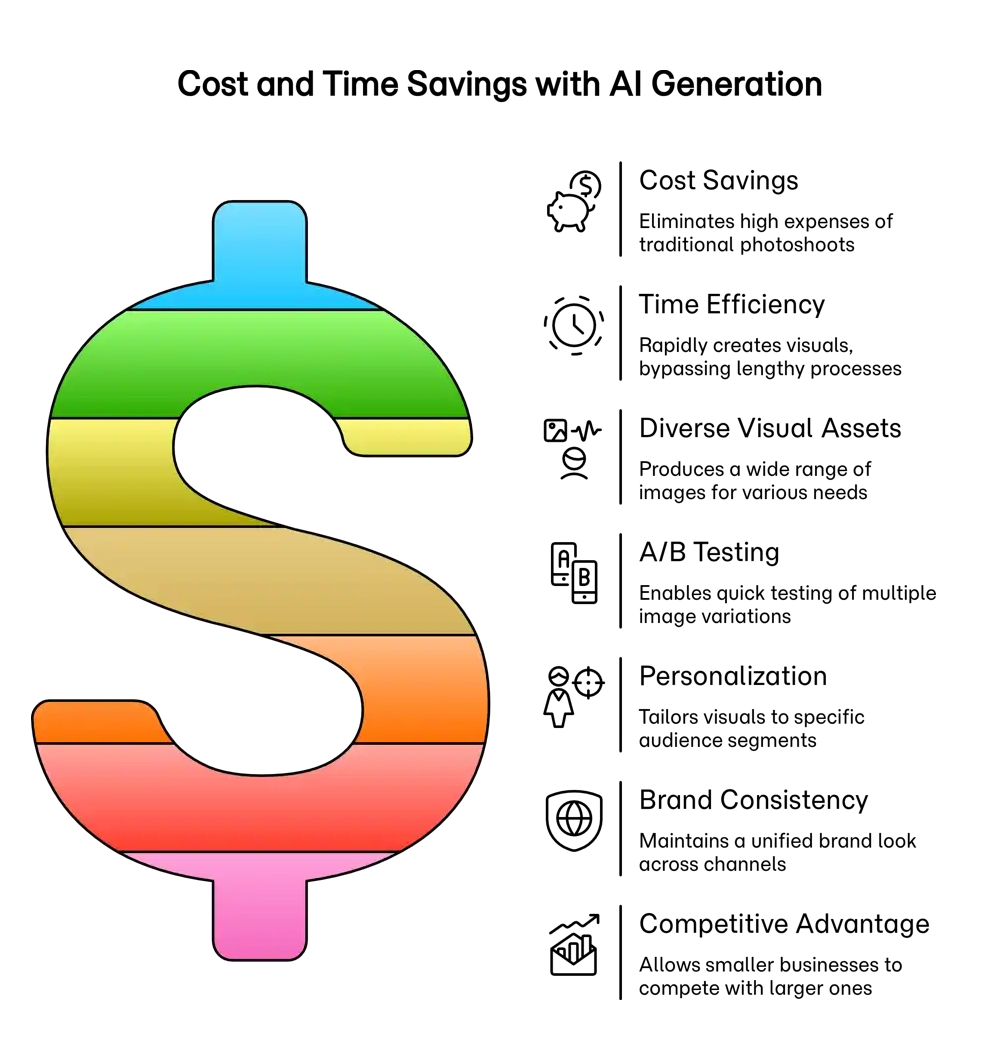
Summary of Cost and Time Savings with AI Generation
AI image generation offers significant cost and time savings for marketers by fundamentally disrupting traditional content creation workflows. Instead of incurring the high expenses associated with professional photoshoots including photographer fees, studio rentals, and model bookings marketers can generate high-quality, bespoke visuals in minutes for a fraction of the cost. This technology bypasses the lengthy processes of coordinating shoots and extensive post-production, enabling the rapid creation of a diverse range of visual assets. Marketers can instantly produce multiple variations of images for A/B testing, personalise content for different audience segments, and maintain brand consistency across all channels with unparalleled speed and efficiency. This agility allows businesses, especially smaller ones, to compete with larger companies by producing a high volume of unique and engaging visual content without the traditional financial and temporal constraints.